
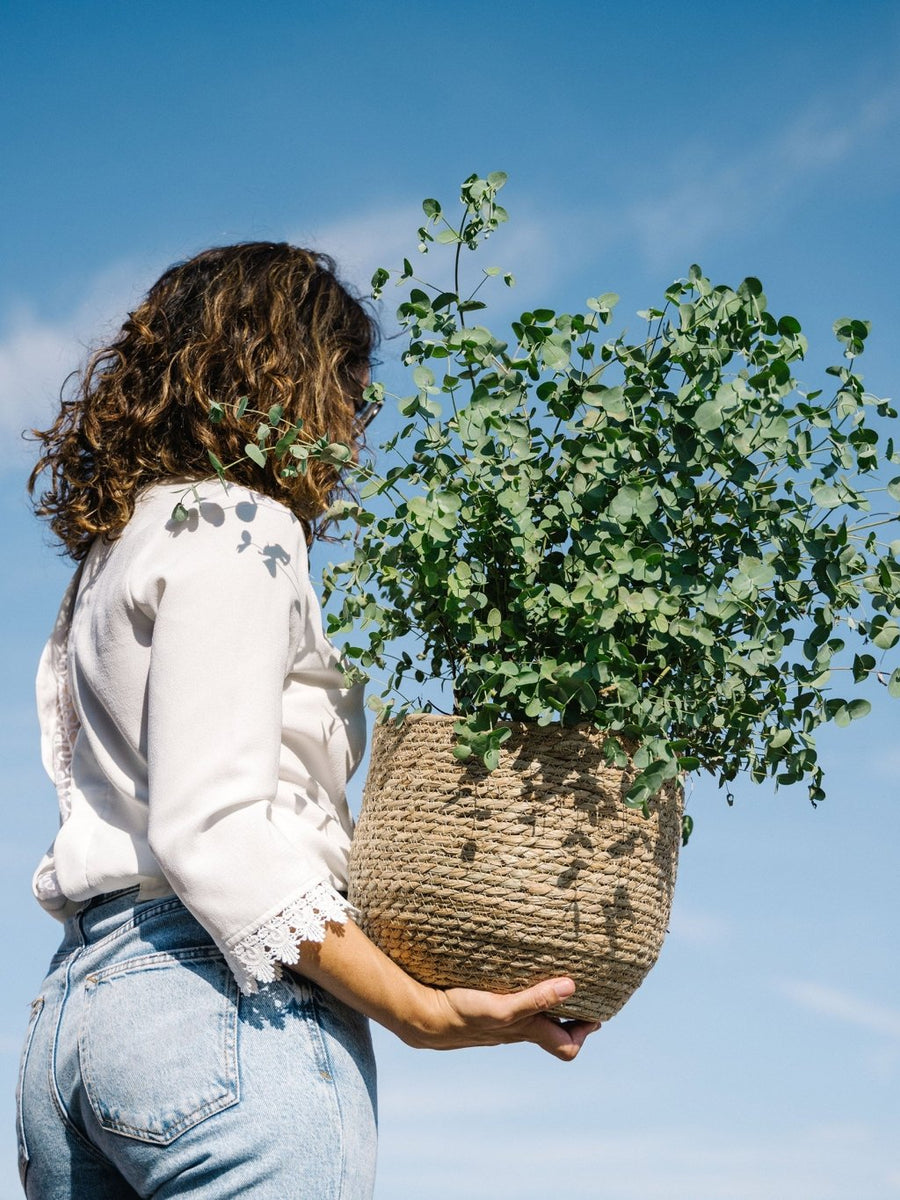

DIY: Growing a clusia hydroponically

It's the latest trend of the moment, hydroponics! It's very aesthetic, we observe the roots of our pretty plants growing, there is very little maintenance, we know when to water,
How to proceed? Which plants are suitable? We answer your questions
What is hydroponics?
It is a method that allows you to grow your plants outside of the soil and it is very easy to set up.
This technique also allows us to take cuttings for our favorite plants.
Here we love,hydroponics, this new way of seeing our dear plants evolve, it’s so fascinating!

What is the advantage of hydroponics?
There hydroponic culture avoids forgetting to water, as well as repotting because the plant remains constantly in water. On the other hand, the plants develop more quickly, being in direct contact with the water because usually the soil absorbs a good part of it.
In hydroponics, we can avoid certain diseases or insect proliferation, because there is no stagnant damp soil and therefore fewer parasites around the plant.
What plants should be used for water culture?

Most indoor green plants can be used for hydroponics. It is best to choose plants that have thick roots, they will hold up much better in water. Avoid flowering plants as well as plants that do not need a rest period or those that live in a dry environment such as cacti. We will also prioritize small plants or cuttings.
Here is a non-exhaustive list of plants to grow in water:
Clusia, Anthurium, Philodrendron, Pothos,... We offer on our site a DIY Clusia kit in hydroponics.
Here are the steps to follow to put your Clusia in water
How to prepare a plant in hydro?

- Repot your plant
- Remove all the soil without damaging the roots. It is very important that there are no traces left
- Rinse the roots with lukewarm water
- Place the plant gently in its glass container and cover the roots with water. Use spring water to avoid limescale and provide minerals.
Every 6 months, empty the container, clean it and the roots of your plant, as a light deposit of algae may form.
Ideally, at least twice a year, you should add a nutrient solution, a liquid fertilizer specific to hydroponics in order to fill any nutrient gaps that your plant may have.
Quick tip: Switch to hydroponic growing mode in spring : the new root system will develop better.
D'autres fiches
pour vos plantes.
Chaque variété a sa fiche d'entretien complète, rédigée par Laetitia et l'équipe. Trouvez celle qui vous manque.

Entretien - Érable Du Japon (Acer palmatum) : Guide pratique
Guide d’entretien de l’Érable du Japon (Acer palmatum) : exposition idéale, arrosage, sol, planta...

Entretien - Épicéa Blanc (Picea glauca) : Guide pratique
Guide pratique pour réussir l’entretien de l’Épicéa Blanc (Picea glauca) au jardin ou en pot : lu...

Entretien - Échinacée (Echinacea purpurea) : Guide pratique
Conseils d’entretien de l’échinacée : exposition, arrosage, sol drainant, taille des fleurs fanée...

Entretien - Waldsteinie Faux-Fraisier (Waldsteinia ternata) : Guide pratique
Guide d’entretien complet de la Waldsteinie faux-fraisier (Waldsteinia ternata) : exposition, arr...
Voir toutes nos fiches d'entretien →Pourquoi La Green Touch ?
Une petite famille française, en direct producteur, depuis bientôt 10 ans.

Direct producteur
Aucun intermédiaire entre nos producteurs et vous. Qualité supérieure, fraîcheur optimale, impact carbone réduit.

Livraison sécurisée
Colis spécialement conçu pour vos plantes. Expédition rapide, suivi fiable. Offerte dès 60 € par producteur.

Prête à offrir
Plante sélectionnée avec soin, emballage dédié et guide d'entretien inclus. Le cadeau idéal.

Conseil inclus
Plus de 100 000 clients accompagnés. Notre équipe reste disponible pour vous aider à prendre soin de vos plantes, à tout moment.