


Dipladenia

Tout savoir sur
cette collection.
À propos de cette collection
Dipladenia Selection Guide
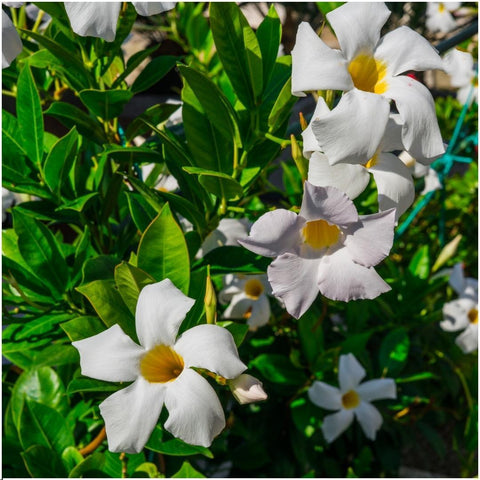
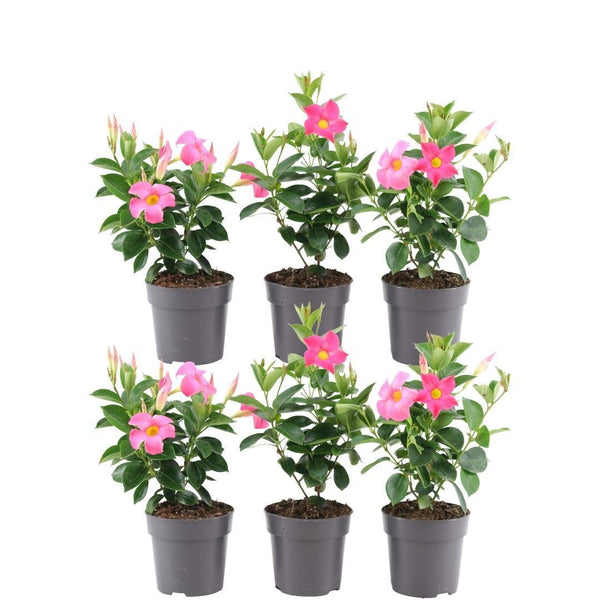
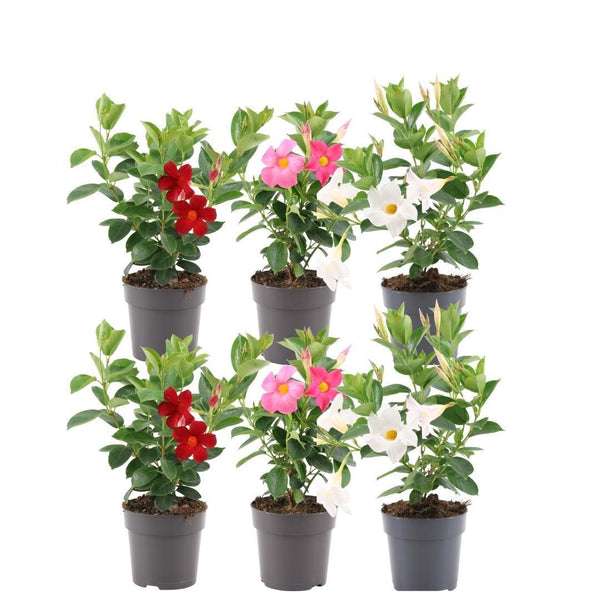
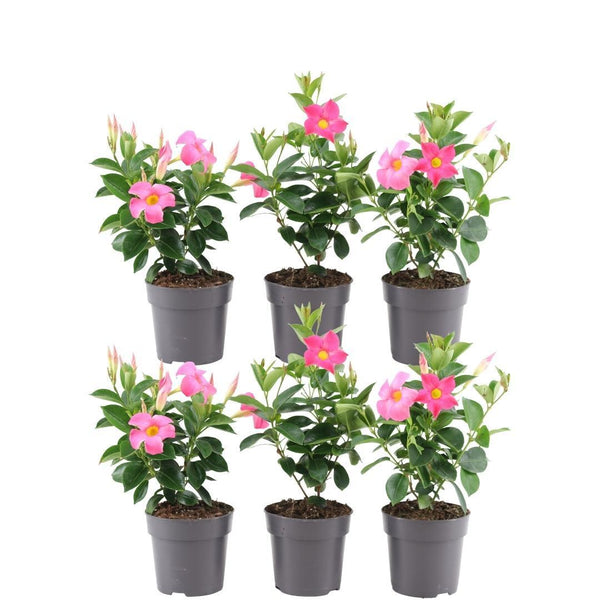
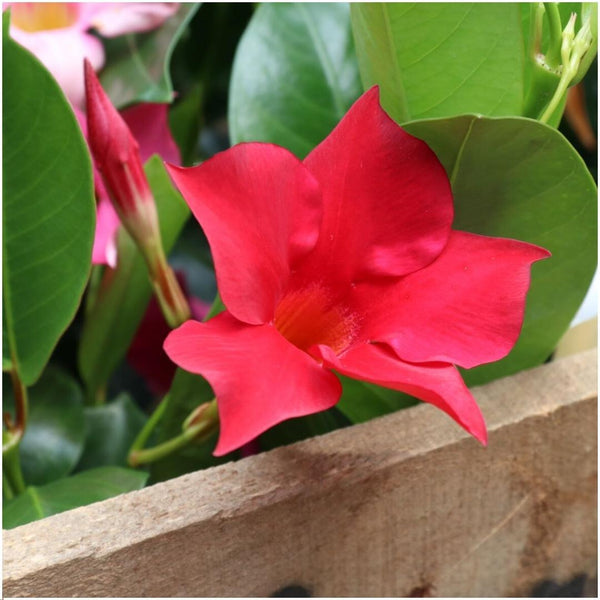
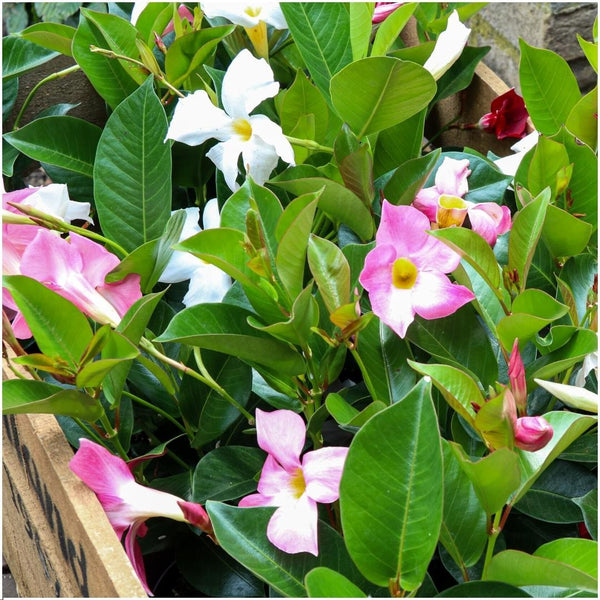
Choose your dipladenia based on available space and aesthetic preferences. Compact varieties suit planters and hanging baskets, while climbing forms perfectly dress up trellises and pergolas. Opt for red or pink shades for a spectacular effect, or choose white for a more delicate touch.
Check the cold hardiness of your region: some varieties tolerate frost better than others. For beginners, bushy dipladenia varieties are easier to manage than climbing cultivars.
Complete Guide to Dipladenia
Dipladenia, also called Mandevilla, is an ornamental plant native to South America. This climbing plant captivates with its abundant and colorful flowering that extends from May until the first frost.
Planting and Exposure
Plant your dipladenia in well-draining soil rich in humus. This plant appreciates a sunny to partly shaded location, with a minimum of 4 to 6 hours of sunlight daily. Avoid cold winds and drafts that can damage delicate foliage.
Care and Watering
Watering should be regular but moderate: soil should dry slightly between waterings. During the growth period, apply liquid fertilizer every two weeks to encourage abundant blooming. Regularly remove faded flowers to stimulate new bud formation.
Container Growing and Overwintering
Dipladenia grows excellently in pots or planters. Choose a container at least 30 cm in diameter with drainage holes. In cold regions, bring the plant indoors before frost in a bright, cool location (10-15°C). Significantly reduce watering at this time.
5 bonnes raisons de choisir nos plantes fleuries
- Des couleurs toute l'année — Nos plantes fleuries apportent des touches de couleur vive à votre intérieur.
- Floraisons longues — Nous sélectionnons des variétés connues pour leur floraison durable.
- Ambiance chaleureuse — Rien de tel qu'une plante en fleurs pour rendre un espace accueillant.
- Cadeau parfait — Une plante fleurie fait toujours son effet, pour toutes les occasions.
- Conseils de floraison inclus — Nous vous guidons pour faire refleurir vos plantes saison après saison.
Questions fréquentes
Is dipladenia an indoor or outdoor plant?
Dipladenia is primarily an outdoor plant that enjoys sunshine and warmth. It can be grown indoors in a bright conservatory, but requires substantial light to bloom well.
When is the best time to plant dipladenia?
Plant your dipladenia after the last frost risk, typically in May. This timing allows the plant to establish before intense summer heat and benefit from the entire growing season for development.
How do you make dipladenia climb?
Install a support such as a trellis, stakes, or pergola at planting time. Gently guide the climbing stems by wrapping them around the support. The plant attaches naturally thanks to its twining stems.
Is dipladenia cold-hardy?
Dipladenia is not frost-resistant and fears temperatures below 5°C. In regions with harsh winters, grow it in a pot and bring it indoors during the cold season.
Why isn't my dipladenia blooming?
Lack of flowering can result from insufficient sunlight, excess nitrogen, or overly wet soil. Place the plant in full sun, use phosphorus-rich fertilizer, and check soil drainage.
How do you prune dipladenia?
Prune lightly in spring by removing dead branches and shortening overly long stems. Severe pruning can compromise flowering as blooms appear on current-year growth.
Guide d'entretien Dipladenia
Consultez notre fiche complète avec tous les conseils pour prendre soin de vos plantes.
Pourquoi La Green Touch ?
Petite entreprise familiale française, en direct producteur, depuis bientôt 10 ans.

Direct producteur
Aucun intermédiaire entre nos producteurs et vous. Qualité supérieure, fraîcheur optimale, impact carbone réduit.

Livraison sécurisée
Colis spécialement conçu pour vos plantes. Expédition rapide, suivi fiable. Offerte dès 60 € par producteur.

Prête à offrir
Plante sélectionnée avec soin, emballage dédié et guide d'entretien inclus. Le cadeau idéal.

Conseil inclus
Plus de 100 000 clients accompagnés. Notre équipe reste disponible pour vous aider à prendre soin de vos plantes, à tout moment.