

Sarracenia Psittacina
Découvrez la Sarracenia Psittacina, la plante carnivore unique!
Sarracenia Psittacina en un coup d'œil
- Famille
- Carnivore
- Taille
- Plante M
- Exposition
- Soleil indirect, Ombre
- Entretien
- Demande de l’attention
- Animaux
- Toxique
- Emplacement
- Salle de bain, Cuisine
- Caractère
- Carnivore, Original, Idée cadeau
Livraison standard en 3 à 5 jours ouvrés depuis la commande, préparation et transport compris. Livraison offerte dès 60 € par producteur. France métropolitaine hors Corse ; DOM-TOM et Monaco exclus. Si vous choisissez la livraison programmée, réception la veille, le jour choisi ou le lendemain. Délais, frais et suivi.
Un problème de plante, de taille ou un oubli ? Signalez-le sous 3 jours ouvrés après réception à hello@lagreentouch.fr, avec le numéro de commande et des photos. Nous privilégions le remplacement après examen du dossier. Pour un dégât Everspring : plante à côté du packaging et étiquette transporteur visible sur la même photo. Ce délai de signalement ne limite pas vos garanties légales. Conditions et photos à fournir.
Tout savoir sur Sarracenia Psittacina
Sarracenia Psittacina, also known as the parrot pitcher plant, is a carnivorous plant belonging to the genus Sarracenia. Native to North America, this perennial herb is found primarily in lowland marshy areas of pine forests.
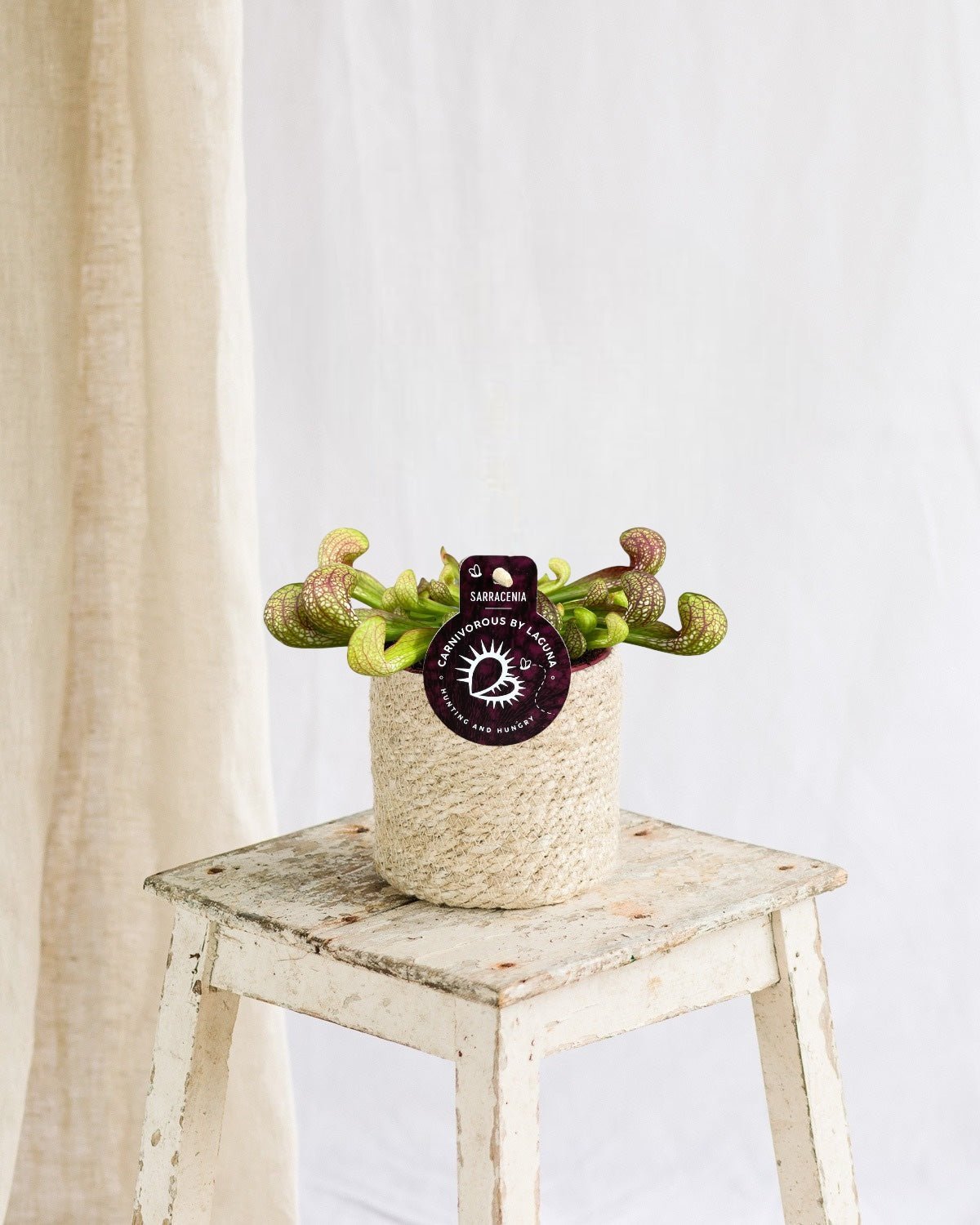
The Sarracenia Psittacina is unique in its kind with a very distinctive shape reminiscent of a parrot's beak with white areoles (windows) and a small hidden opening. The pitcher tubes are horizontal and usually remain tight to the ground in a flat, prostrate rosette.
The plant is distinguished by its green and purple pitchers adorned with showy purple-red caps. The pitchers are grouped in a rosette with the outer crown of pitchers usually resting on the ground. This Sarracenia species was so named because of its spout-shaped, dome-shaped lid.
It is a perennial outdoor plant that can grow up to 6 inches tall. It requires full sun during the growing season and rainwater or distilled water to thrive.
Sarracenia Psittacina is not only a fascinating plant to look at, but it also plays an important role in the ecosystem, helping to control the population of harmful insects. Add this intriguing plant to your collection and observe its unique beauty and carnivorous behaviors up close.
Conseils & entretien.
Retrouvez nos fiches par variété pour choisir les conseils adaptés à votre plante.