


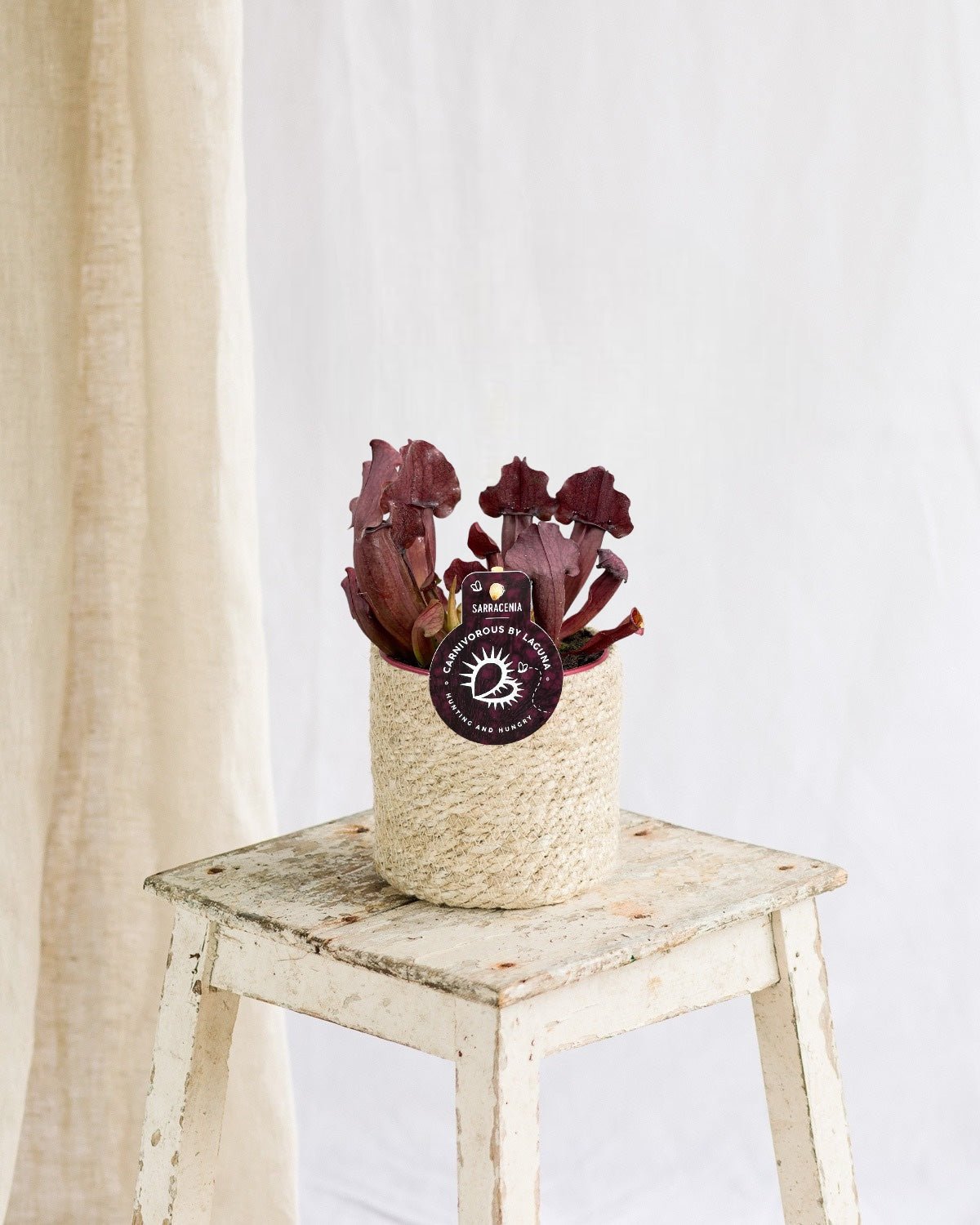
Sarracenia Maroon
Sarracenia Maroon, la plante carnivore au rouge profond!
Sarracenia Maroon en un coup d'œil
- Famille
- Carnivore
- Taille
- Plante M
- Exposition
- Soleil indirect, Ombre
- Entretien
- Demande de l’attention
- Animaux
- Toxique
- Emplacement
- Salle de bain, Cuisine
- Caractère
- Carnivore, Original, Idée cadeau
Livraison standard en 3 à 5 jours ouvrés depuis la commande, préparation et transport compris. Livraison offerte dès 60 € par producteur. France métropolitaine hors Corse ; DOM-TOM et Monaco exclus. Si vous choisissez la livraison programmée, réception la veille, le jour choisi ou le lendemain. Délais, frais et suivi.
Un problème de plante, de taille ou un oubli ? Signalez-le sous 3 jours ouvrés après réception à hello@lagreentouch.fr, avec le numéro de commande et des photos. Nous privilégions le remplacement après examen du dossier. Pour un dégât Everspring : plante à côté du packaging et étiquette transporteur visible sur la même photo. Ce délai de signalement ne limite pas vos garanties légales. Conditions et photos à fournir.
Tout savoir sur Sarracenia Maroon
The Maroon Pitcher Plant is a fascinating carnivorous plant that will delight botany enthusiasts. Native to North America, this plant has unique characteristics that make it captivating and attractive.
Physically, the Maroon Sarracenia is distinguished by its magnificent pitchers of a dark purple, almost burgundy color, from which it takes its name. These pitchers, which can reach up to 30 cm in height, are in fact insect traps. Each pitcher is decorated with a large "hood" that prevents rain from diluting the precious nectar inside.
The leaves of the Maroon Pitcher Plant are linear and develop in a basal rosette. In summer, the plant produces beautiful deep red flowers, topped with five petals. These flowers hang from stems that can reach up to 60 cm in height.
The Maroon Pitcher Plant prefers acidic, moist, well-drained soil. It needs plenty of light to grow fully. In winter, the plant goes dormant, but comes back to life in spring with renewed vigor.
Not only is this plant a spectacular addition to any garden or houseplant collection, it is also incredibly useful. In fact, its ability to catch and digest insects makes it an excellent choice for organic pest control.
In summary, the Maroon Pitcher Plant is a beautiful and interesting carnivorous plant that offers a fascinating spectacle and a practical benefit. With its exotic looks and unique abilities, it is sure to be the talking point of any plant collection.
Conseils & entretien.
Retrouvez nos fiches par variété pour choisir les conseils adaptés à votre plante.