
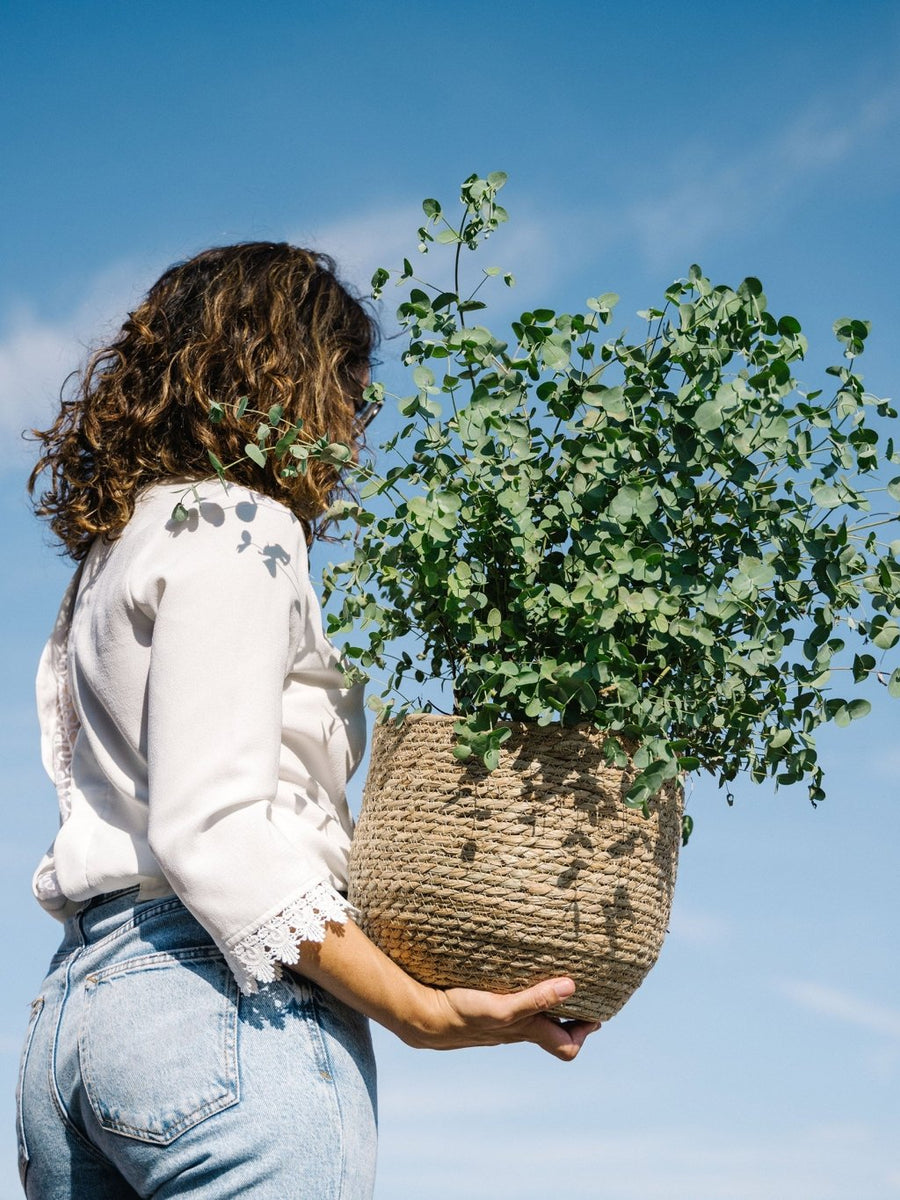

Our 6 tips for caring for your baby or mini indoor plants - <tc>La Green Touch</tc>


Why buy baby or mini plants ?
- Mini plants therefore not invasive which allows to adapt to all types of apartments. Because in Paris we have apartments that are necessarily smaller than in the provinces finding space for plants can be a real obstacle course ! With baby plants the problem no longer arises, it can be easily stored anywhere. You can also collect them on a beautiful shelf high up to optimize space in your interior and have a pretty plant decoration trendy.
1. The ideal exhibition
2. Temperature, be careful of excess heat or cold
3.Hygometry, an important factor not to be neglected
4.Different watering depending on varieties and periods
5. Fertilizer in spring to make your plants grow
6. Repot your baby plants if they grow too quickly
- Line the bottom of your new pot with a draining layer of gravel or clay balls
- Fill the pot with soil suitable for the plants you are repotting.
- Unpot your plant, to turn the plant over, tap lightly on the pot to make it come out, then remove as much soil as possible from around the roots, they must be clearly visible.
- Repot your pante carefully : to do this, first dig a hole using your fingers and then plant it and don't forget to pack everything well.
- Cover with the remaining potting soil.
- Water generously.
Consult our blog article dedicated to repotting
Discover our top 5 of the most trendy and easy to maintain baby plants

Also called Lucky heart, it is a mini plant to offer to our loved ones and loved ones.
It improves air quality, and flowers when it is more mature. It grows very slowly but eventually forms a vine with heart-shaped leaves.

The famous peacock plant!
The leaves of Calathea open and close depending on the light and its humidity needs
It has depolluting properties and is not dangerous for animals.

It is known as "False Philodendron", but has become famous in recent years thanks to Instagram.
Monsteras are beautiful and easy to care for and their ability to survive in less exposed places makes them very practical indoor plants.

Ceropegia is nicknamed the chain of hearts because of the shape of its small water-soaked leaves.
It is a magnificent drooping plant that is easy to cut.

Pilea Peperomioides is also called Chinese money plant. It grows by producing a small central trunk and its round leaves fall all around it.
Pilea has depolluting properties, and is a good luck charm for some. It is also easy to cut and can thus grow into many plants.
D'autres fiches
pour vos plantes.
Chaque variété a sa fiche d'entretien complète, rédigée par Laetitia et l'équipe. Trouvez celle qui vous manque.

Entretien - Érable Du Japon (Acer palmatum) : Guide pratique
Guide d’entretien de l’Érable du Japon (Acer palmatum) : exposition idéale, arrosage, sol, planta...

Entretien - Épicéa Blanc (Picea glauca) : Guide pratique
Guide pratique pour réussir l’entretien de l’Épicéa Blanc (Picea glauca) au jardin ou en pot : lu...

Entretien - Échinacée (Echinacea purpurea) : Guide pratique
Conseils d’entretien de l’échinacée : exposition, arrosage, sol drainant, taille des fleurs fanée...

Entretien - Waldsteinie Faux-Fraisier (Waldsteinia ternata) : Guide pratique
Guide d’entretien complet de la Waldsteinie faux-fraisier (Waldsteinia ternata) : exposition, arr...
Voir toutes nos fiches d'entretien →Pourquoi La Green Touch ?
Une petite famille française, en direct producteur, depuis bientôt 10 ans.

Direct producteur
Aucun intermédiaire entre nos producteurs et vous. Qualité supérieure, fraîcheur optimale, impact carbone réduit.

Livraison sécurisée
Colis spécialement conçu pour vos plantes. Expédition rapide, suivi fiable. Offerte dès 60 € par producteur.

Prête à offrir
Plante sélectionnée avec soin, emballage dédié et guide d'entretien inclus. Le cadeau idéal.

Conseil inclus
Plus de 100 000 clients accompagnés. Notre équipe reste disponible pour vous aider à prendre soin de vos plantes, à tout moment.